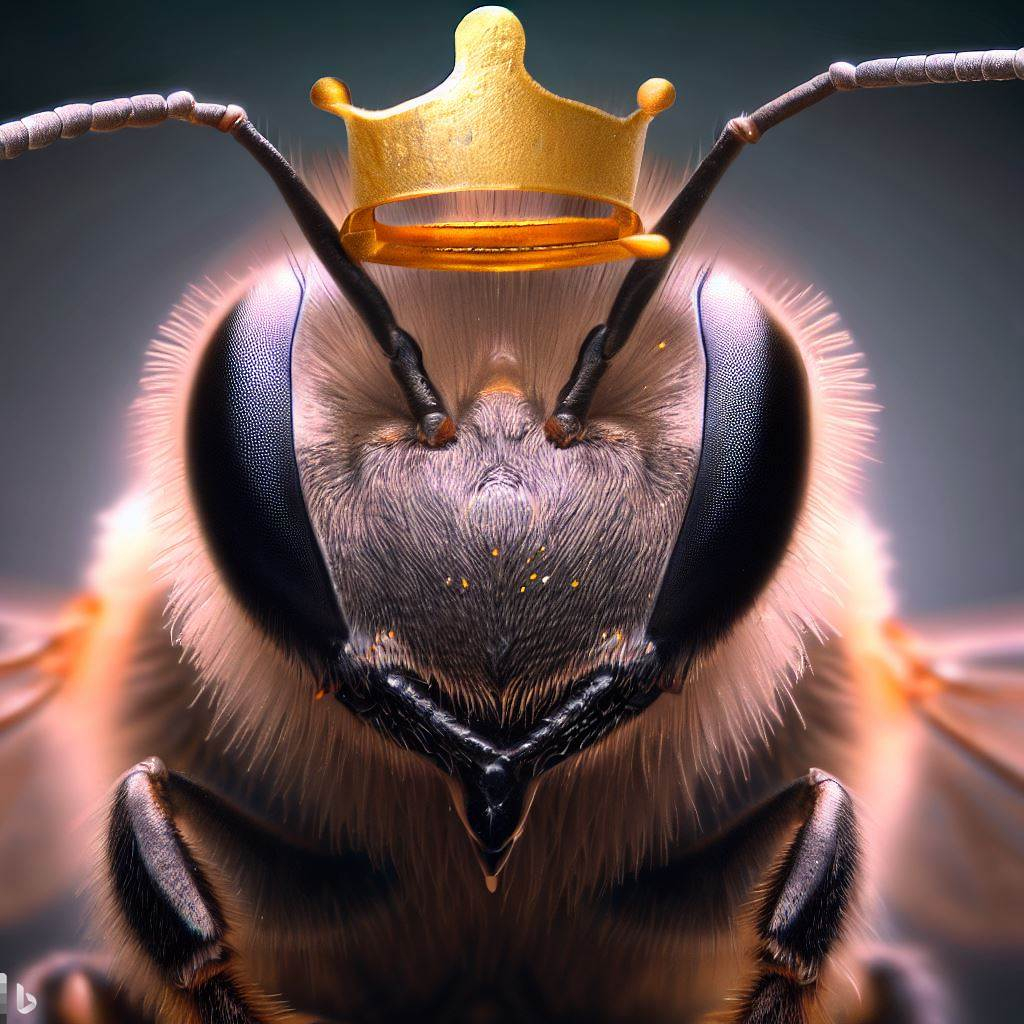
Who is really calling the shots in the beehive.
It is often thought that the queen is “in charge” within a honey bee colony. But is she? Is the queen making the decisions on behalf of her subjects for the smooth functioning of the hive?
There are three types of bees in a honeybee colony: the queen, of course, and the workers and drones. The drones serve no other real purpose but to mate with the queen. The workers are the ones doing all the necessary tasks to keep the hive “buzzing,” like gathering nectar and pollen, caring for their young, keeping the place clean, etc.
The queen gets busy right from the moment she is born. She first has to assassinate all of the rivals to the throne. Then, she goes off on her mating flights where drones literally kill themselves for a chance to mate with her. When she returns, she’ll settle into her job and start laying eggs. That will remain her primary purpose for the rest of her life.
The queen emits pheromones that will permeate throughout the colony. These pheromones will be on the other bees and are used to identify members of the family from robbers and invaders.
But who is making the decisions?

A honey bee colony is a super organism. The colony makes decisions and often acts as one. Like any household, honeybees have a plethora of day-to-day decisions that have to be made for the hive to continue functioning. These decisions include:
- Where are the best places to find food
- Is this house getting too small and do some of these bees have to move out?
- If we move, where are we going?
- What kind of eggs should the queen be laying, workers or drones?
- Is the queen still performing well, or is it time she retires?
Answering these questions are not in the queen’s job description. She’s too busy laying eggs. If not the queen, then who takes charge and sees to it that the bees decide and then act on those decisions?

Just like all the other jobs of the colony, the burden to get all this stuff done lands squarely on the shoulders of the workers.
How they do each of these is nothing short of fascinating.
Finding food
A honeybee colony can have tens of thousands of hungry bees to feed, every day. Not only do they have to be fed all the time, the bees have to collect enough resources to put away in storage to survive the winter.
Foraging bees leave the hive every day in search for food and other resources. I shouldn’t say every day, because if it is too cold, raining or other bad weather, the bees stay home until conditions improve.
When a foraging bee finds a particularly good source of food, they’ll collect all the pollen or nectar they can carry and zip back to the hive.
Upon arrival, the bee will hand off the nectar to another worker who starts turning it into honey. The forager then shares the news of the food source with everyone else. This information is communicated through dancing.
The “waggle dance” is how honey bees tell the other foragers where she found the nectar or pollen, both in terms of direction from the hive and how far away it is.
The bee will communicate this information by a set of precise movements that the other bees can understand. They’ll in figure eights and dance (waggle) in the direction of the food source. But the angle the bees dance isn’t in relation to the hive, but instead in relation to the sun.
The other foraging bees will exit the hive and then orient itself to the sun, correcting even for the amount of time that elapsed and if the sun had moved, and then off they go in the distance specified by the waggle dancer.
They receive other information from the waggler too. The foraging bee also still had some of the scent of the flower on her body that the other bees can smell. The waggle dancer will also retain nectar samples and share those with the other foragers.
One foraging bee found a food source. She filled up, flew back home and shared that information with her sisters. The foragers then fly off individually, armed with the distance, direction, the smell of their target flower and even what it taste like.
But wait, there’s more!
Studies have shown that new forager bees aren’t nearly as accurate in their waggle directions as the older ones. This means that the new foragers learn their waggle from the older bees. Meaning, the older forager bees are teaching the younger bees how to waggle.
Moving Out
As honey bees are a super organism, another thing they do is reproduce. Not just as individuals, through the eggs laid by the queen, but as an entire colony. The bees will turn one honey bee colony into two. This is through swarming.

There is a lot of work to be done once the colony decides it’s going to swarm. Exactly how they decide it’s time to swarm and how they communicate that decision across the hive, we’re not sure.
Swarming takes about half the bees out the front door, never to return. How do the bees decide who is to leave and which bees are going to stay, we don’t know that either.
But, once that decision is made, it triggers a bunch of actions across the hive. First, she doesn’t know it yet, but the existing queen is going with them. The colony their leaving still need a queen to survive. The bees start preparing “swarm cells” in which new queens will develop.
Also, the existing queen probably hasn’t flown in quite some time. Her attendants have been feeding her regularly as she goes about her duties of laying eggs. In the meantime, she likely to have become a little less than “fit to fly.”
Once they receive word that the colony is going to swarm, the queen’s attendants will reduce or even stop feeding her. She’ll lose weight and involuntarily will be ready to go.
Concurrent to these actions, the worker bees will send scouts out to start looking for a new home. How do they decide where the new colony is going to live? The workers vote on it.
The scouts return to the hive with their recommendation where the colony should live. They communicate their findings by doing the waggle dance again. This time, however, instead of directing the bees to food, it is to their new digs.
More scouts are sent out to both check out the places the other bees found and to look for other options. These scout bees return and they waggle. The places with the fewest votes are eliminated from further rounds of voting and more scouts may go check out the places receiving the most votes.

These rounds of voting may take one to several days. Then, the bees will decide enough is enough and the new house that has received the most votes overall is finally chosen. They then pick up, kit and kaboodle, and with the queen in tow, fly off to their new hive.
We still don’t know how that final decision is made and communicated throughout the colony. They know and off they go.
Should the queen lay worker or drone eggs?
As we know, the queen’s job is to lay eggs. She will lay eggs for both new worker bees and new drones. But how does she decide what type of egg to lay?
In short, she doesn’t. The worker bees who are making the egg cells make that decision.
The queen has hairs around her abdomen. Every time she lowers herself, backwards, to lay an egg, either those hairs touch the sides of the cell or they don’t.
The queen, of course, doesn’t make the cells that she’s laying eggs in, the workers do.
Whether that egg is going to be a drone or a worker is decided by how big the cell is. If the wax cell is bigger, the queen lays an unfertilized drone egg in it. If the cell is smaller, she lays a fertilized worker egg in it.
The queen doesn’t even decide which type of egg she is going to lay. The decision of the proportion of drones versus workers in the colony is also decided by the workers.
Is the queen still up to snuff?
Like the rest of us, queen bees get old. As they age, the productivity of the queen bee, measured by how many eggs she is still laying. Some key factors in deciding if the queen is still at the top of her game include:
- Queen honeybees typically live between 3 to 5 years.
- They are considered “old” when they reach around 2 years of age.
- Their reproductive capacity declines significantly after 2 years.
- Beekeepers may replace queens every 1 to 2 years to maintain hive productivity.
- Environmental factors and colony health can influence their lifespan.
- Some queens may live longer in optimal conditions, but this is rare.
At some point as the queen’s performance declines with age, the workers will decide she’s got to go.
How they decide, which bee makes that ultimate decision and how do they communicate that through the colony? Other than the queen’s declining performance, we don’t know.
In any event, the bees will begin the process of making a new queen, just as they did when they swarmed. The workers in this case make supersedure cells.

Supersedure is the term used to describe the situation where the bees have decided to replace their queen.
Honeybees are amazing animals. They work as a super organism, making life changing decisions every day that affect the lives of every of the up to 60,000+ bees in the colony.
How they make these decisions are still largely a mystery.
If I missed something, or if you have any other amazing honey bee facts, please let us know in the comments.

Be Sure to Subscribe and Never Miss a Post!
Like, Follow and Share our Facebook page!

Leave a Reply