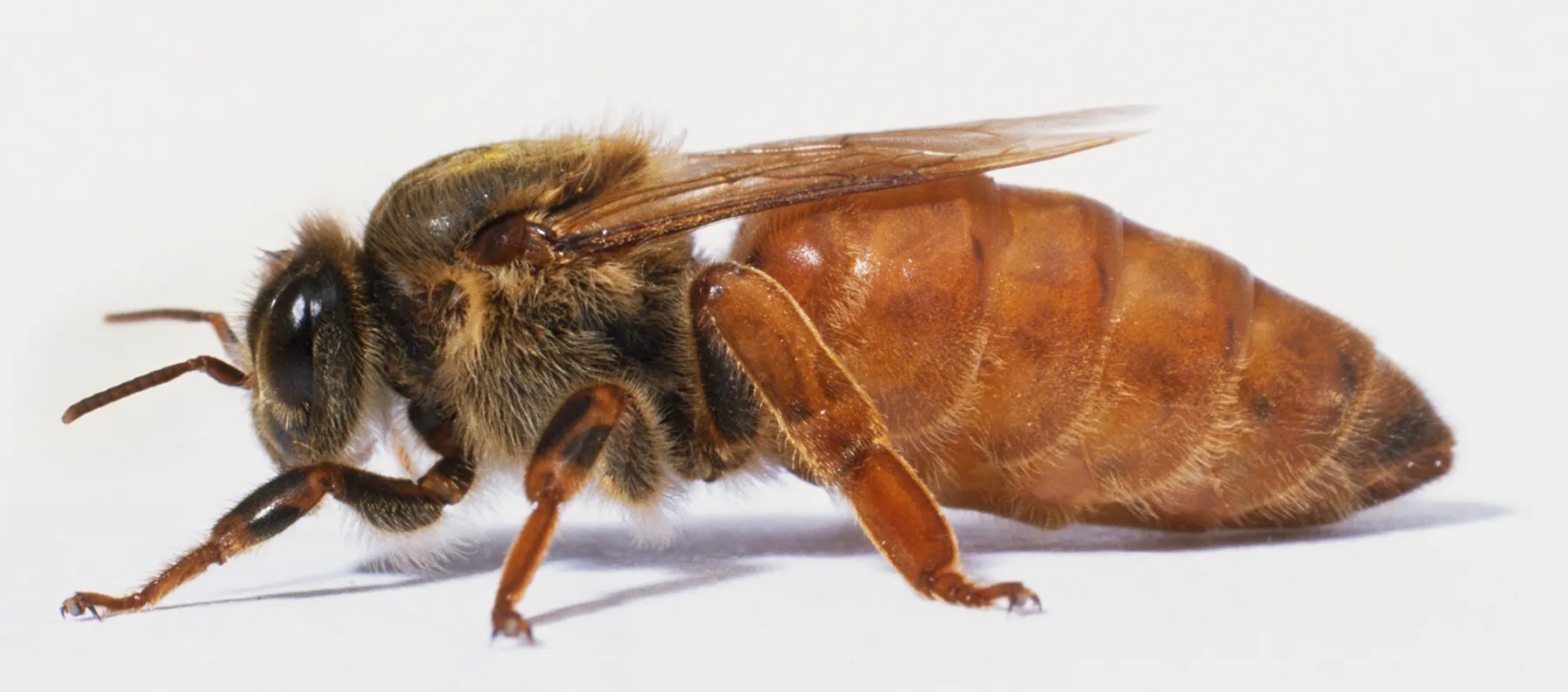
The life of a queen honey bee.
Being royalty means life is easy. The workers feed you, clean you and generally cater to your every need. All you have to do is walk around and lay a few eggs. The life of a queen honeybee is life on easy street.
Maybe not.
It would be more accurate to say, the life of a queen honeybee is one filled with danger, intrigue not to mention endless work and responsibility. The queen had better keep her head on a swivel and watch her back, or she’ll be brutally replaced. She not only has to keep her subjects happy with her performance, but has to constantly be on the lookout for upstart rival queens.

Like most aspects of honeybee behavior, just the life of a queen honeybee is absolutely fascinating.
A queen’s life often has a very violent start.
To make a queen, the workers will construct a special cell for her in which her egg will develop. To start a baby queen, the workers will place an already bee egg that is not more than 3 days old into a specially constructed cell that is larger and wider than the cells the workers or drone (male) eggs hatch in.

The steps in hatching a queen honeybee:
- Honeybee queen eggs hatch in about 3 days.After hatching, the larvae are fed royal jelly for several days.
- The larval stage lasts approximately 5-6 days before pupation.
- The entire process from egg to adult queen takes about 16 days.Queens are fully mature and ready to mate shortly after emerging.
There are three main reasons why the worker bees will decide to make a new queen.
- The old queen died and needs to be replaced in a hurry, these are “emergency” queens because the colony has no queen.
- The old queen isn’t performing well, and needs to be replaced. These cells are “supersedure” cells.
- The workers decided to split the hive into two and those leaving are taking the queen with them. These are called “swarm” cells.

Regardless of why the bees decided to replace their queen, the new queen will emerge from the cell as a fully developed adult bee in about 16 days.
In a bee colony, only the female worker bees and the queen can sting. Worker stingers are barbed and when they sting something, like us, the stinger is ripped out of their abdomen. For workers, stinging is fatal.
Queen bees can also sting. However, their stingers have no barbs. This means they can sting over and over. There is a reason queens need this ability.
The newly hatched queen bee’s first job in the colony is to kill all the rival queens. If two or more queens are born at about the same time, they will fight to the death for their throne.
The queen that is lucky enough to survive this bloodbath will take over the colony. But she has another task immediately at hand.
At the time of her birth, this new “virgin” queen can’t lay eggs until she mates with one or several male bees, called drones. The drones will gather in places called drone congregations, and await queens to fly to meet them.
Queens will fly up to five miles to find these drone congregations.
For the drones, this is a one-way trip. When a drone bee mates with the queen, his reproductive organs are ripped from his body and he falls to his death.
The queen will take off several times to go find drones and get mated. She will mate with several drones on these mating flights. When she returns, she’ll carry with her all the sperm needed to fertilize the eggs she’ll need for the rest of her life.
These trips are full of hazards. After fighting her way to the top, she may just die while out on her mating flight. The queen may get eaten by birds and other predators. She may not be able to return to her hive due to bad weather and other environmental factors.
If she is successfully mated, and if she makes it back to her hive, she will then finally be ready to start her life’s work.
The queen’s job is to lay eggs. The future of the colony depends on her ability to reliably lay enough eggs to not only replace the bees that die from natural causes, predators and other causes, but also to grow the hive.
A queen bee will live up to 3 years and lay up to 2500 eggs every single day! Some sources say a queen bee may live up to five years, but even a three year old queen is an old bee.

Eventually, the colony will face one of the situations discussed above and it is time for a new queen. If the colony outgrows their hive, they’ll decide to split with half the colony leaving and taking the queen with them. The queen may die and leave the colony to make a new one post haste.
Or, as the queen ages, her performance declines and the workers decide its time for their monarch to go. In any of these cases, the whole process starts over.
This is just a brief and elementary overview of a honeybee queen’s life.
Subscribe and you’ll get alerts when I continue the story of our fascinating honeybees!


Leave a Reply